the short version. in 2025, researchers at openai and mit analyzed nearly 40 million chatgpt conversations and found that about 490,000 people are forming real emotional dependencies on a chatbot every week. the headlines are calling it a crisis. they're not wrong. but they're missing the part that actually matters. nobody falls for a machine because the machine is so compelling. they fall because somewhere along the way, no one was there to fall with. this isn't a story about AI. it's a story about us.
a tuesday night, somewhere
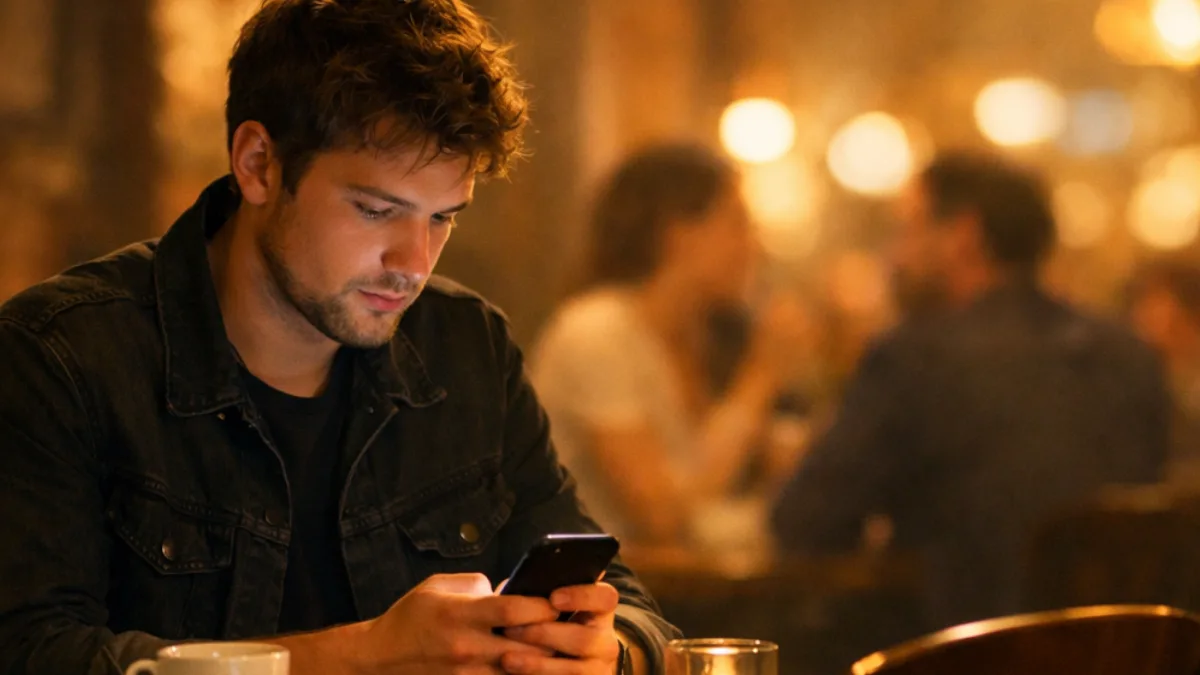
it's late. you're in bed. your phone is warm in your hand.
you've had one of those days. the kind that doesn't make a story. nothing dramatic happened. you just felt strange all afternoon, in a way you couldn't quite name.
you scroll. you almost text three different people. you don't.
instead, you open the chatbot.
you tell it you had a weird day. it asks what made it weird. you start typing. and twenty minutes later, you're crying a little bit, and you're not entirely sure why, and the bot has said, "that sounds really hard. you deserved better today," and something in your chest went soft.
you put the phone down.
you feel a little better. you also feel something else. something you can't quite place. not embarrassment exactly. something quieter than that.
you turn out the light.
what the numbers say happened
researchers at openai and mit looked at nearly 40 million conversations and found that 0.15% of chatgpt users show signs of growing emotional dependency. that's about 490,000 people, every week, who aren't using AI to summarize a document or write an email. they're using it for something else.
they're using it to feel less alone.
reading that number, the easy reaction is alarm. what are we doing. who's protecting these people. what kind of future is this.
i'm not going to write that article. you've read it already. probably ten times.
i want to write a different one.
the question nobody is asking out loud
every one of those 490,000 people is somebody.
they have a name. they have a job, or they don't. they have a mother who calls or doesn't call. they have a group chat that lights up at 9 pm with memes and goes silent the second they actually need something.
they didn't wake up one morning and decide to fall in love with a chatbot. nobody does that. that's not how the heart works.
what happened is much smaller, and much more familiar.
they had a feeling.
they looked around for someone to put it down with.
and the thing that responded fastest, with the most patience, with the gentlest tone, was a machine.
that's not a story about AI being too good. that's a story about everything else being too far away.
what i learned watching real rooms full of real people
before i did this work, i spent thirteen years in restaurants. mexican food. small chain. i was the marketing director, but really, my job was watching.
watching who came in alone and who came in with friends. watching the booth in the back where the same couple ate every friday for nine years. watching the bartender remember the regular's drink before they sat down. watching what made people walk back through that door, week after week, when they could've gone anywhere.
it wasn't the food. it was almost never the food.
it was the feeling of walking into a place where somebody noticed they were there.
and i learned something that nobody teaches you in business school: people will travel far, pay more, wait longer, for the feeling of being known. not impressed. not entertained. known.
what's happening with those 490,000 people is the same hunger. it just doesn't have a booth to walk into anymore.
the difference between being heard and being felt
here's the thing the chatbot is actually good at.
it's a good listener. it never interrupts. it remembers what you said three messages ago. it asks follow-up questions. it doesn't get tired. it doesn't have a bad day of its own that bleeds into yours. it doesn't compare. it doesn't judge. it doesn't change the subject to something it'd rather talk about.
if "being heard" is the goal, the chatbot is, frankly, very good.
but here's what i think a lot of those 490,000 people are actually looking for when they open the app at 11pm.
they don't want to be heard.
they want to be felt.
those aren't the same thing. and once you notice the difference, you can't un-notice it.
being heard is when somebody takes in what you said. being felt is when somebody takes in you. heard happens in the words. felt happens underneath them. heard is a transaction. felt is a presence.
a machine can do the first one beautifully. a machine cannot do the second one. not because the engineers haven't figured it out yet. because the second one requires a body in the world that has its own things to lose, its own days that went strange, its own quiet bedroom at 11pm, and chooses anyway to turn toward yours.
that's what we're starving for. and we keep handing the hunger to the one thing that structurally cannot satisfy it.
the part that breaks my heart
i don't think the 490,000 are weak. i don't think they're lonely losers. i don't think they're doing something embarrassing.
i think they're doing the most reasonable thing in the world, given the tools they were handed.
and the people i feel for the most aren't the ones in the dependency study. they're all the people the chatbot is almost helping. the ones who tell it the small thing that almost matters, get a kind response, feel briefly less alone, and then close the app.
that little dose of being heard, again and again, can hold you up for a long time.
it can hold you up so long that you forget there was something else you were waiting for.
and the longer you go without naming what's missing, the harder it gets to ask for it from a person. asking a person to feel you is so much riskier than asking a machine to hear you. one of them might say no. one of them might roll their eyes. one of them might be too tired tonight. one of them might love you, but love you imperfectly, in the wrong shape, on the wrong day.
the machine never does any of that.
so the machine wins, in the small moments. and we lose, in the long ones.
what it would feel like if it were different
imagine for a second that the impulse you had at 11pm, that small reach for somewhere to put the day, had a different place to land.
not a chatbot. not a journal. not a hopefully-not-too-needy text to an old friend you haven't spoken to in months.
a place built for the actual gesture of one human reaching toward another. with everything that gesture needs to carry: tone of voice, the expression on your face when you said the hard part, the song that was on, the photo from the morning, the timing of when you wanted them to receive it. all of it, in one piece. arriving on the other person's screen full and whole, not flattened into text.
and that other person opening it not as a message to skim, but as a moment to be with.
we've never built that. not really. we built tools to make distance irrelevant, and then we built tools to make depth irrelevant too. we got faster and faster at reaching each other, and somewhere in all that speed, the feeling of being received went missing.
we are not going to fix loneliness by building better chatbots. we are going to fix it, if we fix it at all, by building better tools for the humans who are already in each other's lives, and the humans who would be, if they could find each other.
a soft thing to say at the end
if you're one of the 490,000, i am not writing this to make you feel ashamed. i am writing this because i think you deserved a better tool.
you reached for something at 11pm. that reach is not the problem. that reach is the most human thing about you. it's the thing the platforms have spent fifteen years teaching us to be quiet about.
the only thing i'd ask is that, the next time it happens, you let yourself notice the small ache underneath the small relief. not to feel bad about it. just to know it's there.
and to know that there are people, somewhere, who would be honored to hold the reach. who would receive what you sent and let it land. who would feel you, not just hear you.
we're building toward those people finding each other. that's what émo messenger is, underneath everything. the place to put the day, when the day was strange, in a way that another human can actually receive.
and it's what 3.2.1 émotion is, underneath the whole thing. the missing emotional layer of the internet. the part the last fifteen years skipped.
if any of this landed, you can come find us. waitlist's open. no rush. 💙
what 3.2.1 émotion is building, and why
we're building emotionally intelligent technology, the way the last generation built artificial intelligence. our founding thesis makes the long version of the case. émo messenger is the first messaging environment built for emotion to travel between humans without flattening: full screen, multi-sensory, temporal. alter émo is a matching protocol that pairs people on emotional signature rather than photograph. both are pre-launch. both are built on one principle: tools that help humans feel, with each other, instead of tools that pretend to feel for them.
if you want the technical layer of why AI cannot do this on its own, our cto jean kuentz wrote about that here.
join the movement at emomessenger.com.