The Founding Thesis
Emotional intelligence as infrastructure, for a more human world.
Manifesto
Technology that helps humans feel, express, understand, and meet each other.
A thesis on why the next great intelligence project has to be this one.
The 20th century was the century of reach. We invented the telephone, the radio, the television, the internet, the smartphone. Tools to make distance irrelevant. By every measure, we succeeded. Humans have never been more reachable.
And humans have never felt more alone.
We have spent 150 years learning how to reach each other. Our generation must learn how to be felt.
It's not IQ. It's not EQ. It's EI.
BUILDING EMOTIONAL INTELLIGENCE FOR A MORE HUMAN WORLD.
Definitions
- IQ - Intelligence Quotient
- A score of cognitive ability. Introduced in the early 20th century to rank individuals on logical and analytical capacity. Static. Individual. Diagnostic.
- EQ - Emotional Quotient
- A score of emotional ability. Popularized in 1995 by Daniel Goleman's bestselling book, which built on the 1990 research of Salovey and Mayer. Still static, still individual, still diagnostic.
- EI - Emotional Intelligence
- An intelligence, not a score. A human capability that can now be extended by technology, language, and connection. Collective. Augmented. Under construction.
I. The misunderstanding
We have been measuring the wrong thing.
For thirty years we've talked about emotional intelligence the way we talk about IQ: as a number you get, a score that ranks you somewhere on a scale.
The shorthand is EQ, the Emotional Quotient. Since Goleman's 1995 book2, it has become a self-help category, a training slide, a line on a personality test. Interestingly, Goleman himself now prefers the term EI4.
That small shift matters more than it sounds.
A quotient is a measurement. It tells you where you stand on a scale that was invented to rank people, the same way IQ was invented to rank people a century earlier1. It treats emotional life as something you either have enough of or you don't, as if empathy were height. And so we ended up with a generation of books, tests, and corporate trainings that all point back at the individual, asking them to fix themselves.
That is not what we're building.
II. What EI actually is
EI is not a score. It is an intelligence.
Think about how we built artificial intelligence. We didn't do it by measuring which humans were smartest and ranking them. We did it by constructing an entirely new layer of cognitive capability, built outside the individual brain, shared across machines and people5.
We are now, for the first time, in a position to do the same thing for emotions. Not to measure who has the most of it. To actually build more of it.
Consider what "building more" means at scale. One in ten humans lives with alexithymia10 - clinically unable to name the thing inside them. Not shy, not avoidant, structurally unable. An EQ test scores them low and asks them to fix themselves. An infrastructure gives them instruments to see what they could not previously see. One treats emotional difficulty as a personal deficit. The other treats it as a capability we never built.
Emotional intelligence, in this sense, is the capability that emerges when humans, language, bodies, and technology learn to hold emotional information the way we've long held logical information. It lives between people more than inside them. It grows with better tools, better words, better rituals of attention. It is infrastructural3, in the same way roads and libraries and the internet are infrastructural.
And it doesn't replace the emotional intelligence you already have. It extends it.
III. The thesis
Every generation gets one great intelligence project.
One generation built artificial intelligence. Machines that could think, or at least mimic it well enough that we stopped drawing a clean line.
The next, we believe, will build emotional intelligence. Technology that helps humans feel, express, connect, and know themselves at a depth that was not structurally available before.
This is not about machines that simulate empathy, or AI that pretends to care. It is about tools that raise the emotional capacity of the humans who use them, individually and in how they relate to each other. A better messenger. A better mirror. And, at the scale of the internet, a protocol that lets emotionally compatible humans finally find each other.
That is the thesis we build around. Our products, our features, our research, all follow from it.
Our generation will build emotional intelligence as infrastructure, the way the last built artificial intelligence.
"We do not need more ways to be heard. We need ways to be felt. Those are not the same thing."
The numbers
The emotional state of the world, in six figures. Not the market. The feeling.
Every number above is a person who went to bed tonight feeling no one had really reached them today.
IV. Why now
One generation invested in physical health. The next, in mental health. Ours will invest in emotional health, and that investment has begun.
Four things converge, for the first time, in this decade.
01 - The crisis is visible.
In June 2025, the WHO Commission on Social Connection, co-chaired by former U.S. Surgeon General Vivek Murthy, released its landmark report: one in six people worldwide now experiences loneliness, linked to an estimated 871,000 deaths every year6. Young people are the most affected, with 17 to 21 percent of 13-to-29-year-olds reporting loneliness, and rates highest among teenagers7. We have built the most connected society in history, and we feel less felt than ever. This is not a mood. It is a structural outcome of the tools we built.
02 - The cause is nameable.
The most connected society in history is also the loneliest. This is not an accident. It is the product of specific design choices, made by specific companies, over the past fifteen years.
The major social platforms optimized for attention, and measured success in time-on-app. The longer you scrolled, the less connected you felt. Dating apps built on swipe mechanics reduced human compatibility to a half-second judgment on a photograph. A wave of generative AI now proposes to write the message for you, simulate the friend, replace the conversation rather than prepare it.
We do not believe the teams behind these patterns are malicious. They optimized for the wrong variable. The loneliness epidemic is the bill coming due.
Three dogmas of the current web produced it. That connection is measurable in followers. That compatibility can be decided in a swipe. That the most useful AI is the one that speaks in your place. We reject all three. They produced the most isolated generation in recorded history. It is time to build the alternative.
03 - The science is ready.
The research we build on is not speculative. Four decades of affective science have mapped how emotions shape cognition, decision, and health. Five decades of cognitive science have shown that human intelligence extends through tools, language, and others. More than a century of psychometrics, from Binet to Salovey-Mayer, has made emotional ability measurable1,2. Affective computing, founded as a field at MIT in 1997, has grown into a market estimated between USD 66 and 96 billion in 2024-2025, with projected growth of 24 to 30 percent per year through 20308. In the past two years, frontier multimodal large language models have begun to be evaluated on their emotional intelligence, with dedicated benchmarks emerging in 2024 and 20259. The raw capabilities exist: voice, face, physiology, language, and context, fused in real time. Most of them are being used to sell things or moderate content. They could be put to a far more interesting use.
04 - The culture is ready to turn.
People are tired of EQ tests. Tired of being told their inner life is a skill gap. There is a growing sense that emotional difficulty is not a personal deficiency but a collective capability we never invested in. And a readiness, finally, to treat emotion with the seriousness we have always reserved for thought.
V. What we build
Four gestures. Four answers. One thesis.
There are four fundamental emotional gestures humans make. Every product we ship answers one of them.
Most of the intelligence being built today erases the human. It writes for us. It decides for us. It pretends to feel for us. Tech that crushes the very thing it was supposed to serve.
We build the inverse.
The same wave of emerging technology, turned the other way: toward the human, not against. Every tool we ship augments a human capability. It does not substitute for it.
Human-first is not a tagline. It is the architecture.
01 - Feeling
The act of being moved: by what happens inside you, and by what another person puts into the world.
Messaging as we know it does not transmit emotion. It encodes information. Text arrives flat. Emoji arrive flattened. Voice notes arrive buried in noise. You read them; you do not feel them.
We rebuild the channel so that emotion sent by one person is actually received by another. An émo is not read. It is lived. Full screen. Multi-sensory. It arrives with voice, light, image, rhythm, and touch, composed into a single emotional scene. Your attention is not scrolling past it. Your whole self is receiving it.
Emotion is not information. It does not need to travel fast. It needs to travel well.
.emo carries its own delivery time: send an emotion into tomorrow, next Tuesday, the day she turns thirty. Your past self can speak to your future self, in emotion.
02 - Expressing
The act of putting a feeling into the world so it can actually be received.
To express emotion digitally has, until now, meant to approximate it. Five yellow faces for a thousand nuances of joy. A heart reaction for a memory. A thumbs-up for relief. The gap between what we feel and what we can send has never been wider.
We close it. feelmoji® gives emotion a precise visual form. .emo gives it a structured, multi-layered format that carries text, image, audio, video, haptics, light, and background atmosphere together, as one object. What you compose is not a message. It is an emotional scene, transmitted whole.
Feeling and Expressing live together inside émo messenger (Product #1), the first environment built for emotion to circulate as emotion, not as data. One person composes. Another person receives. The signal in between does not flatten.
03 - Understanding
The act of reading yourself: seeing the emotional pattern that makes you unmistakably you.
A person is a signal they cannot see. Journaling captures fragments. Therapy takes years. We build the instruments that let you meet your own emotional shape.
émoDNA is the signature: a structured, evolving map of who you are emotionally, built from what you tell us and what we observe. émo is the intelligence: a conversational mirror you can talk with, plug into our products or yours, available when you need to name what you feel before you can share it. Not a replacement for human care. An augmentation of human awareness.
A note on what émo is not. émo is not a therapist. It does not diagnose, prescribe, or replace human care. It helps you see yourself more clearly, so you can better seek what you need. Mental health is human work. We augment it. We do not substitute for it.
The first three gestures live inside a person, or between two people who already know each other. Feeling happens in you. Expressing travels from you to someone you chose. Understanding is a conversation with yourself.
The fourth gesture is different. Meeting is the moment emotional intelligence stops being individual and becomes infrastructure. It is where the thesis of this manifesto has to prove itself. If EI is truly a layer, and not a score, then it must enable humans who have never crossed paths to recognize each other emotionally, the way the internet enabled humans who had never met to exchange information.
This is what alter émo® is for. Not a dating app. A protocol.
04 - Meeting
The act of finding the people who resonate with who you actually are.
Dating apps match photographs. Social networks match performances. Professional networks match titles. In every case, the actual emotional signal, how a person feels, expresses, resonates, has been absent from the matching layer. Humans have been finding humans online through proxies of themselves.
alter émo (Product #2) rebuilds the matching layer from the signature up. We construct your émoDNA from psychological instruments, smart journaling, and longitudinal observation of how you express. Then we match émoDNA against émoDNA. Not swipe against swipe. Not profile against profile. Signature against signature.
A consequence of this architecture: you meet emotionally first, and visually after. Identity is revealed later, once resonance is already there. The photograph stops being the first filter of human encounter. The signature becomes it.
This is where the thesis becomes demonstrable. Two people who have never met, who share no mutual friends, who would never have appeared in each other's algorithmic feeds, can now be recognized as emotionally compatible before they ever speak. That recognition is not a match score. It is the first visible output of emotional infrastructure at scale.
The end, we hope, of mismatch by design. The beginning of connection by signature.
One principle runs under all of it - Privacy is sacred.
Emotional data is the most intimate data a person produces. Where they struggle. Who they love. What they cannot say out loud. We design every product so that your emotional life stays yours: encrypted, stored on your device by default, never sold, never used to train anything without your explicit consent. We do not extract emotion. We protect it.
Each product, each feature, each page, each article is a manifestation of the thesis. None of them is the thesis.
We call this Emotionally Intelligent Technology. It is the category we are building: the missing emotional layer of the internet.
The thesis is the intelligence itself.
"We spent seventy years teaching machines to think. The next fifty will be about teaching them to help us feel, without pretending to feel themselves."
VI. What this changes
A different set of questions.
If you have been reading content about emotional intelligence as a personal skill gap you need to close, that's EQ thinking.
- EQ thinking - Loneliness is a personal failure to connect.
- EQ thinking - A good partner has a "high EQ."
- EQ thinking - The question is whether AI can feel.
- EQ thinking - Emotional intelligence is a skill you practice on yourself.
The better questions are different.
How do we build emotional infrastructure at the scale we have built digital infrastructure?
What does a messaging layer look like when it is designed around emotional transmission rather than information transmission?
What does self-knowledge become, when a system can reflect back the patterns you cannot see yourself?
What does belonging become, when compatibility is recognized at the level of emotional signature rather than social performance?
These are the questions we are here to answer. And one question that contains them all:
What is a generation raised inside emotional intelligence, rather than merely taught EQ skills, actually capable of?
One last thing we believe, quietly: we are not building perfect communication. Perfection kills connection. We are building communication precise enough to carry what you actually feel, imperfections and all.
It's not IQ. It's not EQ. It's EI.
Our mission is simple: to (re)connect humans emotionally.
We are not a wellness brand. We are not a productivity tool. We are building emotional intelligence, the way others built artificial intelligence, for a more human world.
This is not a feature. This is the layer the internet forgot.
Features
feelmoji® - The Expression
A new generation of emoji, designed for emotional precision rather than reaction. Where a classic emoji flattens a moment to a single face, a feelmoji carries layers: intensity, nuance, context. It is the smallest unit of the new emotional language we are building, the pixel of .emo.
.emo - The File Format
Our proprietary file format for emotional content. Where .mp3 carries sound and .mov carries motion, .emo carries emotion, as a multi-layered scene: text, feelmoji, image, video, audio, voiceover, background atmosphere, haptic rhythm, and light. All composed into one file, designed to be received full screen and full sense. An .emo is also temporal: it carries its own delivery time, chosen by the sender. It can arrive tomorrow, next Tuesday, or on a date that matters. The native file type of a feeling, sent forward.
émoDNA - The Emotional Signature
Your emotional signature, built over time from how you express and feel. It is what makes you recognizable emotionally, the way a voice is recognizable sonically. We use émoDNA to build self-knowledge in alter émo, and to power compatibility: two émoDNA can be compared, and the people who would actually resonate with each other can be found.
émo - The Mirror
Our emotionally intelligent conversational layer. Not a therapist. Not a friend. A mirror you can talk with, trained to help you name what you feel, see the pattern you are in, and prepare for the human conversation that actually matters. émo plugs into our products, and can plug into yours: the messenger, the matching app, third-party apps, your own software. Available when you need to understand before you can share. An augmentation of human awareness, never a replacement for human care.
What this is not
We are clear about what we are building. We are also clear about what we are not.
- Not a meditation app. We are not here to calm you down. We are here to help you feel with precision.
- Not a dating app. alter émo is a protocol for emotional compatibility at internet scale, not a product category. Dating is one application, not the thesis.
- Not an AI therapist. émo and our products do not diagnose, prescribe, or replace professional mental health care. We augment the emotional awareness of humans who seek each other and seek themselves. Mental health is human work. We do not substitute for it.
- Not a wellness brand. Wellness is personal. Emotional intelligence is infrastructural.
- Not another social network. We are not optimizing for attention. We are optimizing for resonance.
- Not emotional AI. We do not build AI that pretends to feel. We build technology that helps humans feel better.
- Not a generative AI that writes for you. We do not automate emotional expression. We make it more precise. émo prepares the human conversation, it does not replace it.
- Not tech that replaces humans. The industry is racing to build intelligence that writes, decides, and feels for you. We build the inverse: intelligence that helps you write, decide, and feel more fully yourself. Augmentation, never substitution.
- Not opinion dressed as insight. Everything we build is grounded in peer-reviewed research. Every claim in this document is cited and verifiable.
Signed
This manifesto is the founding thesis of 3.2.1 émotion. We stand behind every word of it.
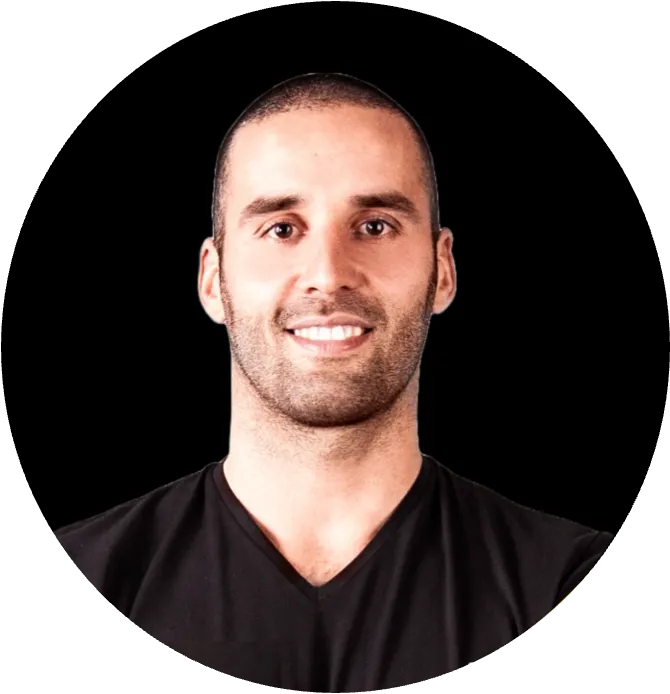
Romain Lala-Bouali - CEO (Chief Emotional Officer) & Co-founder
13+ years helping people feel better.
Entrepreneur and emotional technologist. Romain founded 3.2.1 émotion to build the infrastructure he always wished existed for the emotional life.

Jean Kuentz - CTO & Co-founder
15+ years in infrastructure and systems engineering.
Engineer and systems architect. Jean leads the technology that makes émo messenger and alter émo work, turning emotional abstractions into code that ships.
The products
Product #1 - émo messenger
The first messenger for what you actually feel.
A new kind of messaging app where messages carry emotion, not just words. Full screen, multi-sensory, temporal. Built around feelmoji as expression and .emo as file format, émo messenger lets you compose emotional scenes (text, voice, image, light, haptic, background) and choose the moment they will arrive. Send emotion into the future, to someone you love, or to your future self. An emotional timeline preserves the shape of your life. A private emotional vault keeps what should be kept. Some messages unlock only on a date, a place, or a condition you chose. Not an instant messenger. A slow, temporal one, built for emotion to travel well rather than fast.
Product #2 - alter émo®
Your emotional alter ego. Genuine connection, designed from the signature up.
A matching app that does not match you on photographs or bios, but on the emotional signature that actually predicts resonance. We build your émoDNA through psychological tests, smart journaling, and interactive emotional experiences. Then we match patterns that matter. You connect anonymously first, and reveal your identity only once the resonance is there. You share emotional journeys through activities and challenges. And you grow with AI-guided insights that help you understand yourself as you go. Private by design, powered by AI, built for connections that last.
The lab
Research Arm - émo labs
The laboratory where affective science meets engineering.
Where hypotheses become products. émo labs is the research arm of 3.2.1 émotion, the place where instruments are built, experiments are run, and every feature in our products is tested against evidence before it ships. We read the papers. We write them too. Nothing we launch is grounded in intuition alone.
Glossary
- Affective computing
- The branch of computer science concerned with systems that can recognize, interpret, and simulate human emotion. Founded by Rosalind Picard at MIT in 1997. The technical ground on which emotional infrastructure becomes possible.
- Connection by signature
- The act of finding another human through the match of emotional signatures, rather than through photograph, bio, title, or behavioral proxy. The alternative to mismatch by design.
- .emo
- Our proprietary file format for emotional content. Where .mp3 carries sound and .mov carries motion, .emo carries emotion: a multi-layered scene composed of text, feelmoji, image, video, audio, haptics, light, and background atmosphere. Also temporal: an .emo carries its own delivery time.
- Emotional infrastructure
- The collection of tools, languages, and practices that make emotional communication possible at scale. As the internet was to information, emotional infrastructure is to feeling.
- Emotional layer
- The level at which two people meet emotionally, rather than through profile, photograph, or performance. The substrate under the curated self. The missing layer of the internet.
- Emotional signature (émoDNA)
- The recognizable pattern of how a particular person feels and expresses over time. We construct it through psychological instruments, smart journaling, and longitudinal observation. Used to know yourself, and to find others who would truly resonate with you. The data object we call émoDNA.
- Emotional transmission
- The act of sending a felt state, intact, from one person to another. Distinguished from information transmission, which sends data.
- Emotionally Intelligent Technology
- The category we are building. Technology designed to augment human emotional capability rather than replace it, encode it, or farm it. The architecture under every product we ship.
- feelmoji®
- A new generation of emoji, designed for emotional precision rather than reaction. Where a classic emoji flattens a moment to a single face, a feelmoji carries layers: intensity, nuance, context. The smallest unit of the new emotional language, the pixel of .emo.
- Mismatch by design
- Our term for what current matching tools produce: relationships based on proxies (photo, bio, swipe) rather than on emotional fit. A side-effect of the tools, not a failure of users.
- Resonance
- The quality of connection where two people feel genuinely received by each other. What attention-economy platforms are not optimized for, and what we build toward.
References
- Boake, C. (2002). "From the Binet-Simon to the Wechsler-Bellevue: Tracing the history of intelligence testing." Journal of Clinical and Experimental Neuropsychology, 24(3), 383–405. The concept of IQ originates in Alfred Binet's 1905 work and William Stern's 1912 intelligence-quotient formula.
- Goleman, D. (1995). Emotional Intelligence: Why It Can Matter More Than IQ. Bantam Books. Built on Salovey, P. & Mayer, J. D. (1990). "Emotional Intelligence." Imagination, Cognition, and Personality, 9(3), 185–211.
- The framing of EI as a distributed, augmentable capability rather than a static trait is central to this manifesto. It draws on the tradition of distributed cognition (Hutchins, E. (1995). Cognition in the Wild. MIT Press), on decades of work in affective computing, and on more recent research in human-AI collaboration and socio-technical systems.
- Goleman writes publicly that he now prefers "EI" to "EQ": "There are now dozens of assessments and courses in EQ (or EI, as I prefer)." (danielgoleman.info, accessed 2026.)
- The development of AI as a collective, infrastructural project spanning institutions, laboratories, datasets, and hardware is traced in standard surveys of the field such as Russell, S. & Norvig, P. (2021). Artificial Intelligence: A Modern Approach, 4th ed. Pearson.
- World Health Organization, Commission on Social Connection (2025). From loneliness to social connection: charting a path to healthier societies. WHO, Geneva, 30 June 2025. Co-chaired by former U.S. Surgeon General Dr. Vivek Murthy. Builds on the earlier U.S. Surgeon General (2023) advisory Our Epidemic of Loneliness and Isolation.
- WHO Commission on Social Connection (2025), op. cit. Reports age-specific rates of 17–21% for individuals aged 13 to 29, with the highest rates among teenagers. Converging evidence from Gallup & Meta (2023), The Global State of Social Connections, a 142-country survey, found similarly elevated rates among young adults. Both sources confirm young people as the most affected age group globally.
- Market size and growth estimates aggregated from Grand View Research, Mordor Intelligence, IMARC Group, Verified Market Research, and Data Bridge (2024-2025). The foundational text of the field remains Picard, R. W. (1997). Affective Computing. MIT Press. Picard directs the Affective Computing Research Group at the MIT Media Lab and co-founded Affectiva and Empatica.
- Recent work includes multimodal emotion recognition surveys and emotional-intelligence benchmarks for large language models published in 2024–2025, including EmoBench-M (Hu et al., 2025, arXiv:2502.04424), which evaluates MLLMs on 13 scenarios grounded in established psychological theories of emotional intelligence.
- Prevalence of alexithymia in the general population has been estimated consistently at roughly 10% across large epidemiological studies: Franz, M. et al. (2008). "Alexithymia in the German general population." Social Psychiatry and Psychiatric Epidemiology, 43(1), 54–62 (DOI 10.1007/s00127-007-0265-1, n=1,859, 10%), and Hiirola, A. et al. (2017), Health 2000 Study, Finland (n=5,454, 9.9%). Earlier work by Salminen, J. K. et al. (1999) in Finland (n=1,285) reported 13%. Alexithymia is measured with the 20-item Toronto Alexithymia Scale (TAS-20, Bagby et al. 1994) and characterized by difficulty identifying feelings, difficulty describing feelings, and externally-oriented thinking.
- On the emotional gap in text communication: Kruger, J., Epley, N., Parker, J. & Ng, Z.-W. (2005). "Egocentrism over e-mail: Can we communicate as well as we think?" Journal of Personality and Social Psychology, 89(6), 925–936 (DOI 10.1037/0022-3514.89.6.925). Five experiments conducted at Cornell and the University of Chicago show that senders of text messages believe their intended tone (sarcasm, seriousness, anger, sadness) is correctly decoded about 88% of the time, while receivers actually decode it correctly only 63% of the time - a 25-point overconfidence gap. The authors attribute this to egocentrism: because senders "hear" their own intended tone as they compose, they cannot imagine the message without it.
- On social media and loneliness: Gorman, J. & Primack, B. et al. (2025). "Time and Frequency of Social Media Use and Loneliness Among U.S. Adults." International Journal of Environmental Research and Public Health, Oregon State University, n=1,500+ adults aged 30–70. On the mortality impact of chronic loneliness as equivalent to smoking 15 cigarettes per day: U.S. Surgeon General Vivek H. Murthy (2023). Our Epidemic of Loneliness and Isolation: The U.S. Surgeon General's Advisory on the Healing Effects of Social Connection and Community, 81 pp., 2 May 2023. Builds on Holt-Lunstad, J. et al. (2010). "Social Relationships and Mortality Risk: A Meta-analytic Review." PLoS Medicine, 7(7), meta-analysis of 148 studies covering 308,849 participants.
About the authors

